Reaction Time Games: What Monster Punch Asks Your Brain and Body to Do
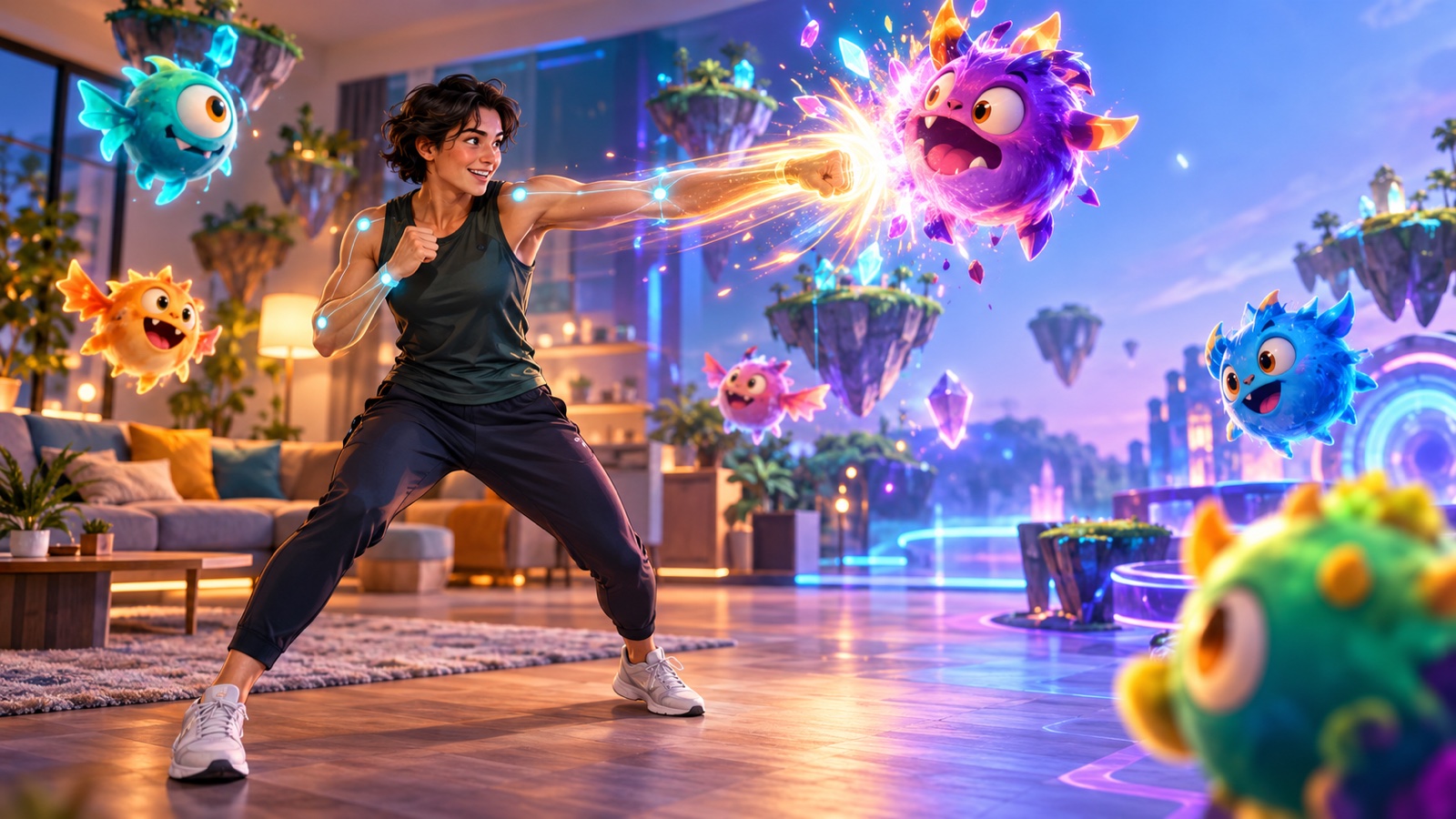
When I first built Monster Punch, I thought the challenge was obvious: see a monster and punch it. The more I tuned the game, the more I realised that the punch is only the final visible action. Before it happens, the player has to find a target, decide which arm can reach it, aim at the right part of the screen and move fast enough for the game to recognise the strike.
That makes Monster Punch interesting to me as one of our reaction time games. It is not a clinical test and I have not run a study showing that it improves general intelligence. What I can do is explain the thinking and movement it requires, show how those demands come directly from the game rules and compare that design with what researchers know about action games.
Reaction time is more than moving quickly
A simple reaction task gives you one signal and one response. A light appears, so you press a button. Monster Punch creates a choice reaction task. Several monsters can be present, they can appear almost anywhere in the frame and they do not all need the same number of hits. The player has to select a response rather than repeat one automatic movement.
This distinction matters when people search for reflex games or games that test reaction time. A single score can hide several stages: detecting a stimulus, directing attention to it, choosing an action and executing that action accurately. Monster Punch deliberately keeps those stages connected.
Visual attention starts before the punch
Monsters can spawn from 5 to 95 percent of the screen width and from 7 to 93 percent of its height. In practical terms, the useful play area covers nearly the whole frame. If the player watches only the centre, a target near the edge can be missed.
This creates a visual search problem. The eyes and attention keep moving between the active targets, the player’s tracked fists, the score and the remaining time. The game can hold up to eight monsters at once, so later moments are not simply faster versions of the opening. They also contain more competing information.
Research on action games often describes a similar combination of transient targets, peripheral events, divided attention and multiple possible motor plans. That does not mean every action game creates the same result. A 2023 meta-analysis found a modest overall cognitive training effect, but game features predicted outcomes better than broad genre labels. Combat, time pressure and an active opponent were among the features connected with attention and perception outcomes. You can read the game-factors meta-analysis.
Response selection is part of the difficulty
Finding a monster is not enough. The player has to decide what to do next. A target on the left may be easier to reach with the left hand. A large monster may need several accurate connections. When defence is needed, raising both wrists above the shoulders and holding them there for 120 milliseconds activates the shield.
This attack-or-defend choice gives the round a useful interruption. Constant punching is not always the correct response. The player has to stop one action pattern and switch to another. In cognitive terms, that brings response selection and inhibition into the play loop. In normal language, it means noticing that the situation has changed before throwing the next punch.
Why this is also a hand-eye coordination game
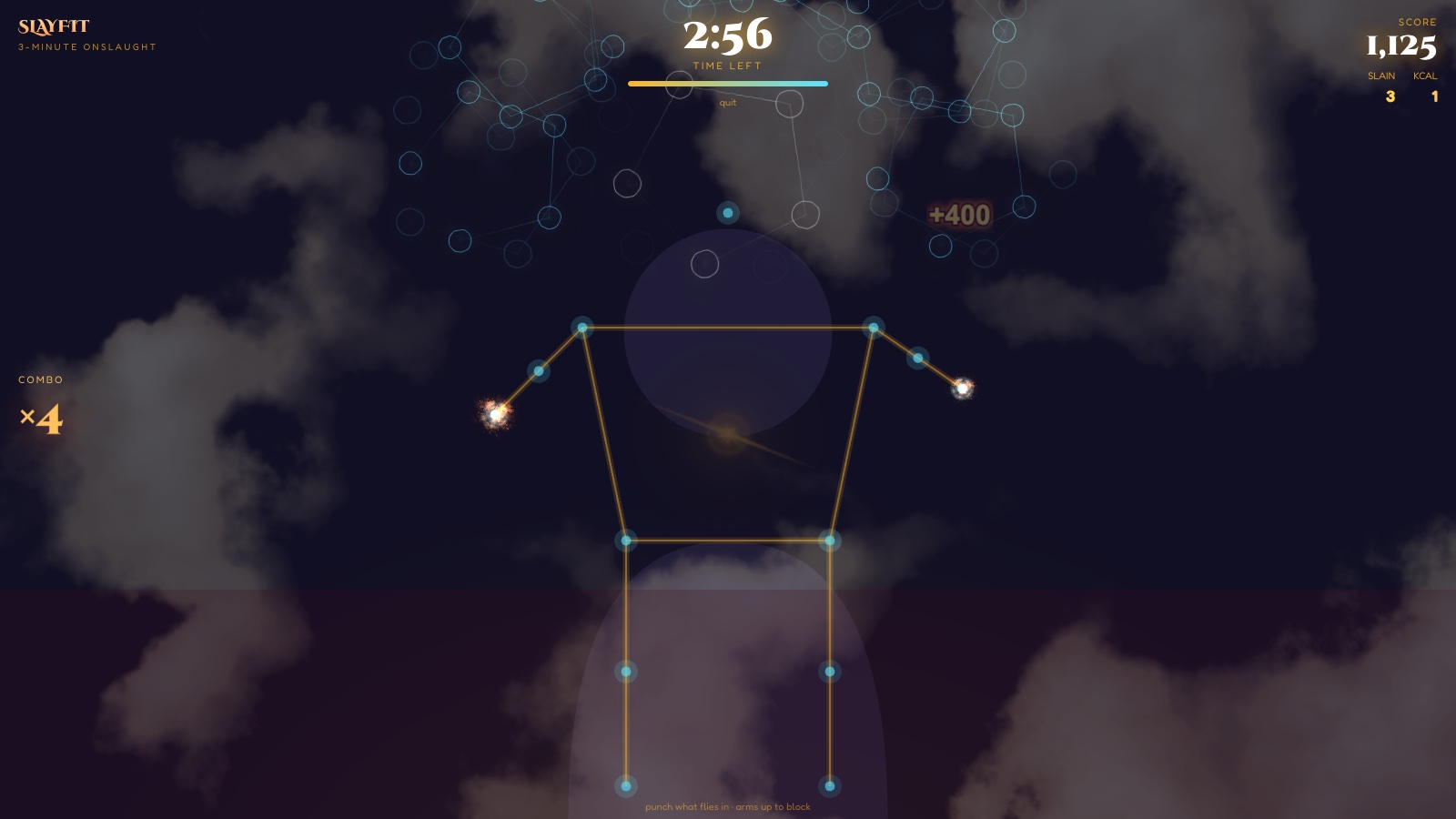
The webcam does not award a hit just because an arm moved. Monster Punch tracks the shoulders and wrists, then looks for a wrist that is far enough from the shoulder and moving at least 1.2 normalised screen units per second. A detected punch makes that fist active for 170 milliseconds.
During that short window, the fist still has to overlap the monster’s circular hitbox. A punch into empty space remains a miss. That is the key reason I think of it as one of our hand eye coordination games. The eyes identify the target, the player estimates where the hand needs to travel and the game checks whether the movement actually arrived there.
Each arm has a 280 millisecond detection cooldown and each monster has a 300 millisecond contact cooldown. Those rules prevent one loose movement from being counted several times. They also make the feedback easier to understand: one deliberate thrust should feel like one connection.
The round increases pressure in more than one way
The first seconds are intentionally readable. Monsters begin at 70 percent of their base movement speed, and a new one arrives about every 1.7 seconds. Over the first 110 seconds, the game steadily changes both variables. Movement speed rises to 210 percent and the base spawn interval falls to 520 milliseconds, with a little variation so the pattern cannot be memorised.
That is a threefold increase in movement-speed scale and roughly a 69 percent reduction in the base gap between spawns. The player gets less time while the scene also becomes more crowded. Higher pressure therefore comes from faster perception, faster response selection and less recovery time between actions.
The four monster types add another layer. The common imp needs one hit. The fiend needs two, the brute needs four and the juggernaut needs seven. A player can clear a small target quickly or stay with a tougher one while new targets enter the frame. That is a basic priority decision under time pressure.
Accuracy and speed pull against each other
Fast movement alone is not the goal. The punch has to land. Accuracy alone is not enough either, because the scene keeps changing. The player is constantly negotiating a speed-accuracy trade-off.
The scoring system reinforces that balance. A successful connection extends the combo for 2.5 seconds, up to a 12 times multiplier. Rushing and missing wastes the opportunity. Waiting too long for a perfect target lets the combo expire. The best round comes from making controlled decisions quickly, not from moving as wildly as possible.
What research lets us say, and what it does not
There is evidence that action video game practice can improve performance on some attention, perception and speed tasks. One review reported faster processing without an obvious loss of accuracy, and later work has tried to identify which game mechanics might explain those effects. Read the review of processing speed in action games.
There is also a serious caution. Researchers have pointed to small samples, weak comparison groups, publication bias and uncertainty about transfer beyond the trained task. A critical review concluded that the evidence was promising but that the size and specificity of the benefits remained unclear. The newer transfer literature makes the same useful distinction: getting better at a game is expected, while broad improvement on unrelated abilities is much harder to establish. See the critical review of action game training and the review of learning and transfer.
So I would not claim that a few rounds of Monster Punch will raise intelligence or improve every kind of reaction time. The honest claim is narrower. While playing, you repeatedly practise a tightly linked sequence of visual search, choice, aiming and whole-body response. Whether that practice transfers to another task is a separate question that would need a proper study.
Why I think this is the right sort of reaction game
A useful reaction game should make the player respond to information, not just move fast for its own sake. Monster Punch gives each action a visible reason. The target has a location. The punch has a destination. The shield has a different pose. The later part of the round asks for quicker choices because the conditions have genuinely changed.
It also keeps the feedback immediate. A connected punch creates an effect at the contact point. A miss stays a miss. A stronger monster visibly survives the first hit. That clarity helps the player understand what happened and adjust the next movement.
For me, that is the strongest design case for this kind of game. It turns reaction time from a number on a test into a loop the player can see and feel: notice, choose, aim, move, check and adapt.
Try Monster Punch in your browser
Play Monster Punch as a one, two, three or five minute round. Use a webcam for body tracking, or start in demo mode to see the rules without camera access.
Free to play · No download · Webcam or demo mode · Spatial punch detection.
If you want the technical build story, read how I turned shadow boxing into a browser game. You can also explore more SlayFit movement games.