Cozy Games: How I Designed Spotless Without a Timer
I wanted to make a tidying game that did not turn cleaning a bedroom into another race.
My first instinct was the familiar one. Scatter objects, start a clock and reward the fastest clean-up. It was easy to understand, but it made every choice feel like a mistake waiting to happen. The timer was deciding the mood before the room had a chance to.
I removed it. That one decision shaped almost everything in Spotless: how objects can have several reasonable homes, when the inspector gives feedback, how the room carries between stages and why the daily puzzle stays comparable without becoming urgent.
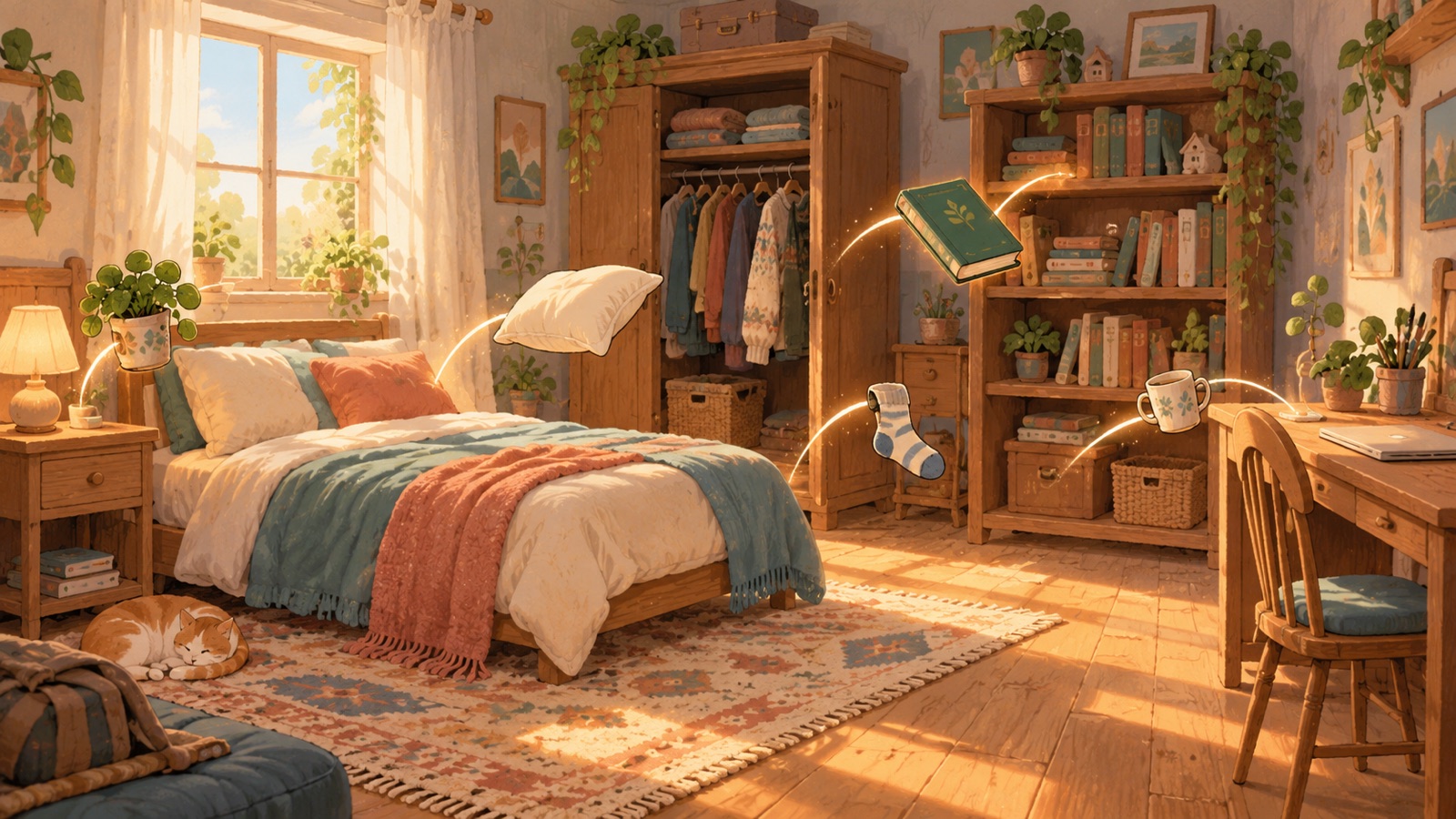
A cozy game needs more than soft colours
Warm art helps, but it cannot make a stressful rule feel calm. If a countdown is always falling, the player reads the room as a checklist. If one exact shelf is correct, the bedroom becomes a hidden-answer test.
I wanted the opposite. The player should be able to look at a book, mug or pillow and ask where it makes sense. That is a small design problem with room for taste. The game still needs rules, but those rules should support judgment instead of replacing it.
This is why Spotless has no lives, energy system, purchases or ads interrupting the room. It is a free cozy game in the browser. The player can stop, reconsider a placement and continue without losing anything.
Several answers can be right
Each object has a set of possible placements. Its natural home earns the strongest rating. Another sensible surface can still be fine. An awkward position scores lower, while a genuinely wrong area scores nothing.
A book belongs on the bookshelf, but a desk is not absurd. A pillow belongs on the bed, but its exact corner does not need to match my preferred composition. That distinction lets the room feel authored without forcing the player to reproduce a screenshot.
The scoring model is deliberately small: home, fine, meh and wrong. I found that more useful than dozens of tiny values. Each level can judge the idea behind a placement while the player remains free to arrange the room.
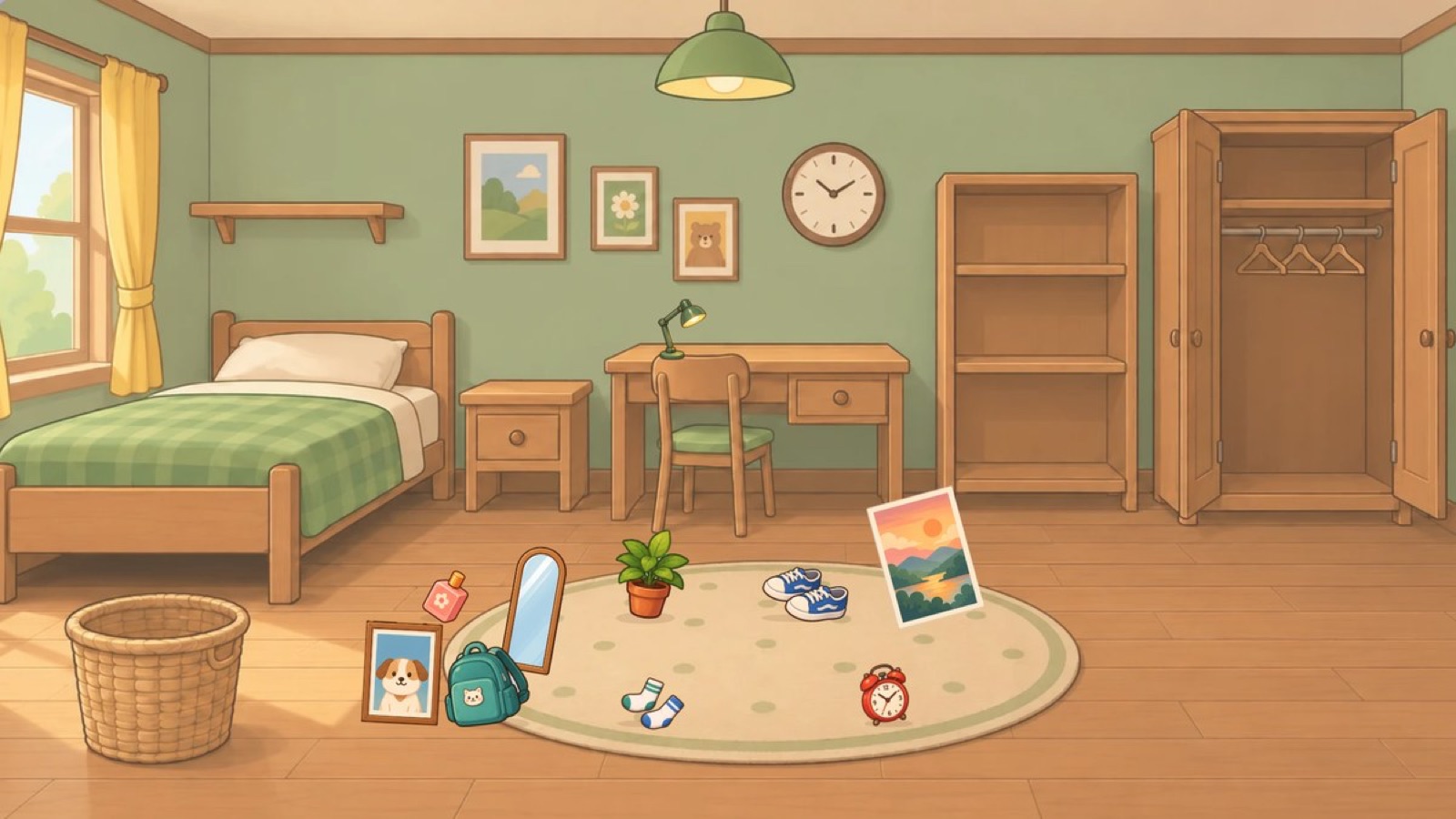
The inspector waits until the player commits
Early prototypes were tempted to show instant red and green feedback. That solved uncertainty, but it also removed the interesting part. The player could drag an object across every surface until the interface revealed the best answer.
Spotless waits. The player places every item, looks at the full room and then calls the inspector. Only then does the game explain which choices worked well and which ones need another pass.
This delay creates a useful rhythm: observe, decide, commit, review. It makes the inspection feel like evidence about a complete idea instead of a stream of hints. It also keeps the room visually quiet while the player is arranging it.
Four stages remember the room you made
The campaign begins with the wardrobe, then moves to the bookshelf, desk and bedside area, and finally the whole room. I did not want those stages to feel like four unrelated boards.
When a stage ends, the placements carry forward. The shirt you hung and the book you shelved remain part of the next room. By the final stage, the player is finishing a space they have already shaped.
That persistence made progression visible without adding a map or a long upgrade tree. The bedroom itself becomes the record of what the player has done.
Portrait and desktop use the same room
A drag-and-drop game has to work on a phone held upright and on a wide desktop screen. Building separate placement rules for each layout would create two games that only looked related.
I store object positions in one canonical room coordinate system. The interface projects those coordinates into the current layout. A shelf remains the same shelf, and a valid placement keeps the same score, whether the player is using touch or a mouse.
This was less glamorous than painting the room, but it protects the core promise. Layout can change. The player's decision should not.
Light progression should not add pressure
Better rooms earn stars and coins. Coins unlock cleaning tools such as spray, a sponge and a vacuum. Dusting adds a second tactile action, but it never places a deadline over the puzzle.
The rewards give returning players something to work toward. They do not sell extra chances or punish a slow attempt. That separation matters in a relaxing game. Progress can provide direction without manufacturing urgency.
The daily puzzle uses consistency, not speed
Spotless also chooses one whole-room puzzle each day from a frozen set. The date produces the seed, so everyone receives the same arrangement on that day.
A shared puzzle creates comparison without a countdown. Players can compare stars, placement quality and a finished room. The interesting question is not who clicked fastest. It is how different people interpreted the same space.
What I learned from making tidying playable
- A calm visual style cannot compensate for a stressful core rule.
- Multiple valid answers need a clear scoring model, not vague generosity.
- Delayed feedback protects the player's opportunity to think.
- Persistent spaces can show progression more naturally than another menu.
- Responsive layouts should preserve decisions, not merely preserve pixels.
- A daily challenge does not need a timer to feel shared.
Tidy the room your way
Spotless became a small organization game about making a room feel sensible. It has rules, scores and progression, but it leaves enough space for the player to make the arrangement their own.
Play Spotless free in your browser. Place the first few objects, call the inspector and see whether your idea of a tidy room matches mine.
Free to play · No download · Mouse or touch · Four campaign stages · Daily puzzle · No timer.
If you like thoughtful building games, read how I made 70 broken machines teach physics through motion. You can also browse more free browser games with no download.