Organization Games: 7 Ways to Earn Three Stars in Spotless
I wanted three stars in Spotless to mean more than putting every object somewhere that looks tidy.
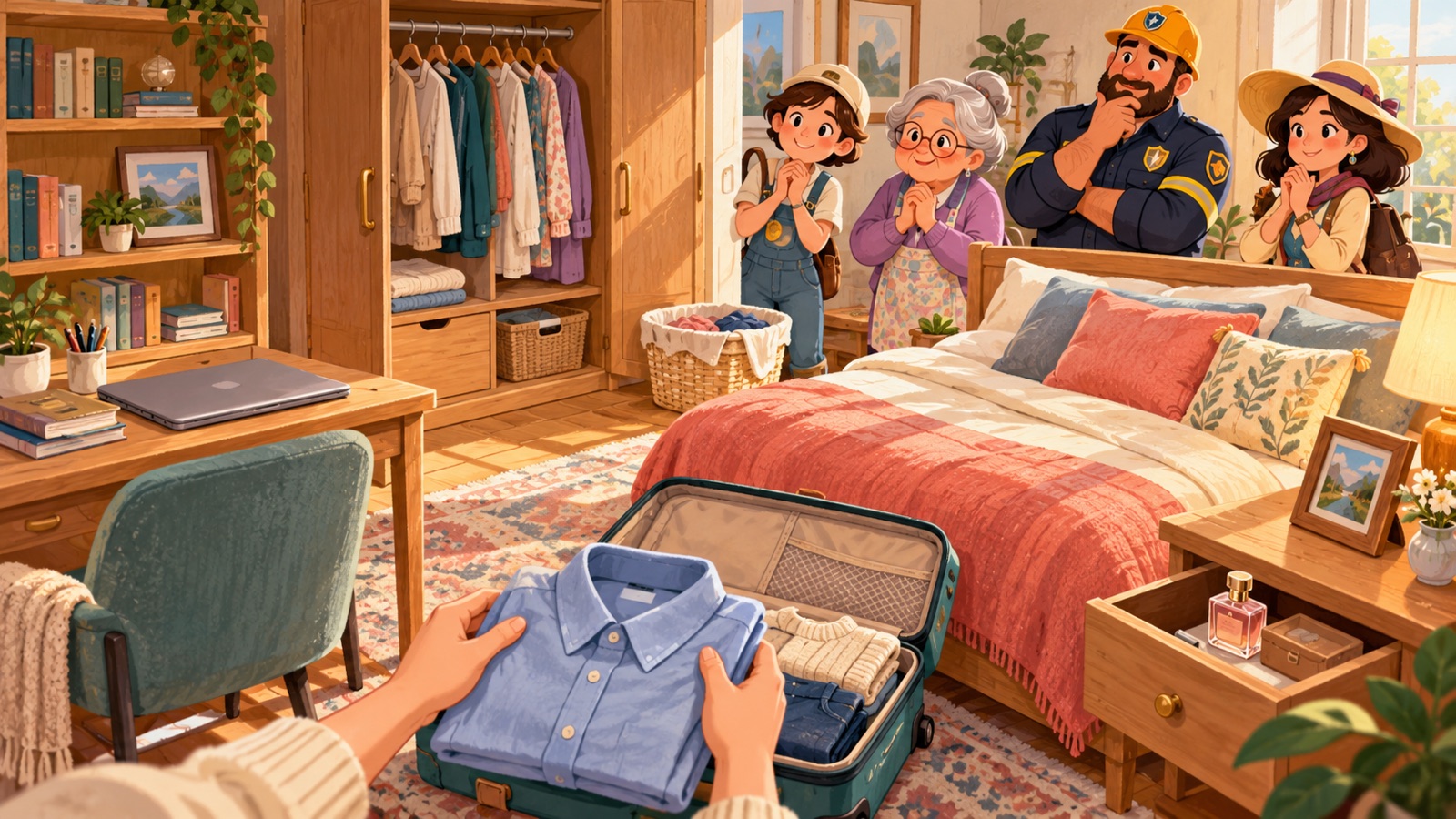
A bedroom can look neat and still hide a laptop in the wardrobe, balance a heavy textbook on a high shelf or leave a fragile frame where it can be kicked. The game judges each placement as a small decision, then combines those decisions into one room score.
That makes Spotless different from organization games with one fixed answer. Several arrangements can work. The difficult part is learning which choices are merely acceptable and which ones make the whole room strong enough for three stars.
1. Learn the four placement ratings
Every item and zone pair has a basic rating. A natural home scores 3. A sensible alternative scores 2. A weak but understandable choice scores 1. A wrong placement scores 0.
A book on a useful bookshelf can be a home. A book on the desk might be fine if it looks actively used. Leaving it on the bed is harder to defend. The exact answer depends on the object, but the pattern stays consistent.
Three stars do not require every item to hit the single best slot. The room earns them when its total reaches at least 88 percent of the best available score. This leaves room for personal arrangement while making repeated weak choices matter.
2. Match the object to the zone before thinking about empty space
The largest empty surface is not automatically the best answer. Start with the object's job. Clothes fit wardrobes and laundry storage. Books fit shelves and study areas. Technology belongs where it can be used and protected.
This is the fastest way to improve at a tidying game. Ask what the object is before asking where it fits. A small item can physically sit almost anywhere, but category gives you the first strong shortlist.
When two zones both make sense, use reach, enclosure and display value to break the tie.
3. Put daily objects within easy reach
Spotless knows whether an object is used daily, weekly or rarely. Daily objects lose value when they are buried or placed too far away. Rare objects do not need to consume the easiest shelf.
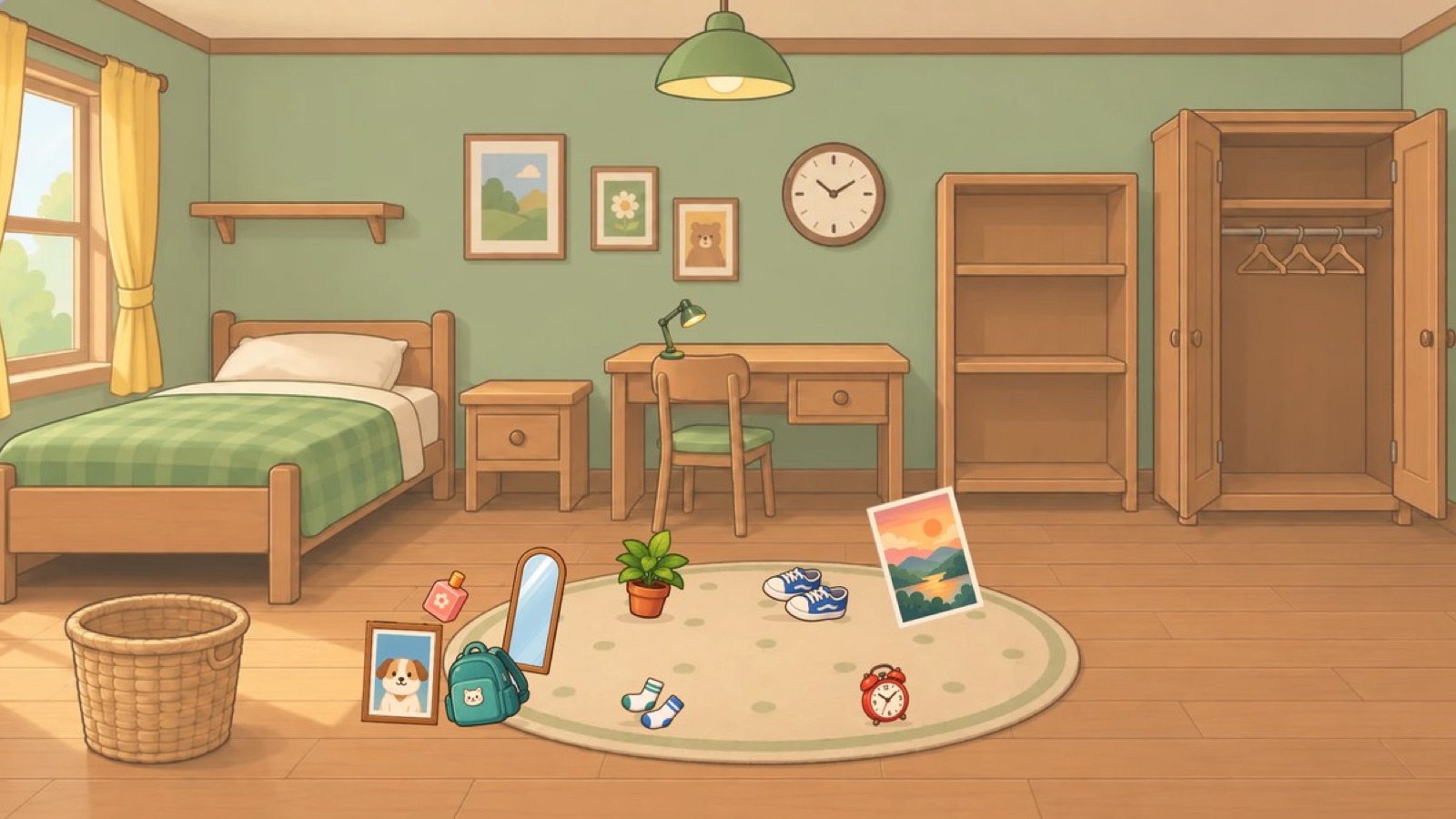
A laptop makes sense at the desk because it is useful there and easy to reach. A suitcase can sit lower or farther away because it is not opened every hour. This is not just visual tidiness. It is an attempt to make the room usable.
Before calling the inspector, scan the high and low zones. If something used every day feels inconvenient, move it closer.
4. Treat fragile, heavy and damp objects as special cases
Some objects carry extra rules. Heavy things are safer low down than over the player's head. Fragile things should not sit on exposed low edges. Damp objects should not be sealed inside storage where they cannot dry.
These rules can turn a category match into a poor score. A photo frame belongs with decor, but hiding it removes its purpose. A heavy textbook may fit the idea of a bookshelf, but the highest shelf is still a risky choice.
Captain Safe cares especially strongly about those mistakes. If he is inspecting, give safety a second pass before submitting the room.
5. Read the inspector, not only the furniture
Four inspectors look at rooms differently.
- Inspector Pip is the balanced baseline. Natural homes and practical reach usually work.
- Nani likes ordinary clutter tucked away, but she wants attractive display objects left where people can see them.
- Captain Safe is stricter about fragile, heavy and child-sensitive placements.
- Guest Gita wants surfaces cleared and everyday clutter moved into enclosed storage before visitors arrive.
The same room can need a small change for a different inspector. Do not rebuild everything. Find the few items that conflict with that visitor's priority.
6. Use every feedback face as a specific clue
The inspector waits until every item has been placed. After the review, each object receives a face. Tap it to hear the explanation again.
This turns a failed three-star attempt into a short list. Start with the worst faces. Their comments usually identify the real problem: wrong category, poor reach, unsafe height, damp storage, hidden display object or visible clutter.
Keep tidying instead of restarting. One strong move can replace a zero with a three, which matters more than polishing an item that already scores two.
7. Improve the room in score order
The three-star threshold rewards priorities. Fix zero-point placements first, then ones, then decide whether any twos have an obvious better home.
Do not chase cosmetic symmetry while a heavy object remains high or a daily tool is buried. A room can look balanced to the eye and still leave easy score on the table.
This approach also helps with the daily puzzle. Everyone receives the same seeded room for that date. A repeatable review order makes a fresh arrangement easier to read without turning it into a speed test.
A quick three-star checklist
- Does every object match the purpose of its zone?
- Are daily items reachable and rare items out of the way?
- Are heavy objects low and fragile objects protected?
- Can damp objects dry?
- Are display objects visible and ordinary clutter controlled?
- Does the room suit the current inspector?
- Did you fix every zero and one before adjusting the twos?
Build your own three-star room
The satisfying part of Spotless is that the answer still looks like your room. The scoring system supplies reasons, but it does not demand one identical arrangement.
Play Spotless free in your browser. Arrange every item, call the inspector and use the faces to turn your first tidy room into a three-star one.
Free to play · No download · Mouse or touch · No timer · Daily puzzle · Multiple valid arrangements.
For the design story, read why I removed the timer and allowed several good answers. You can also explore more free browser games with no camera.