Goalkeeper Tips: 7 Ways to Save More Shots in Keeper
I made Keeper easy to start and deliberately difficult to stand still in.
The first shot gives you time. Then the ball gets faster, bends farther, visits the corners more often and arrives in a wider goal. A run that begins as a reaction test soon becomes a positioning problem.
These seven goalkeeper tips come from the rules in the shipped game. They are not a substitute for football coaching. They are a practical way to read this webcam goalkeeper game and clear more levels.
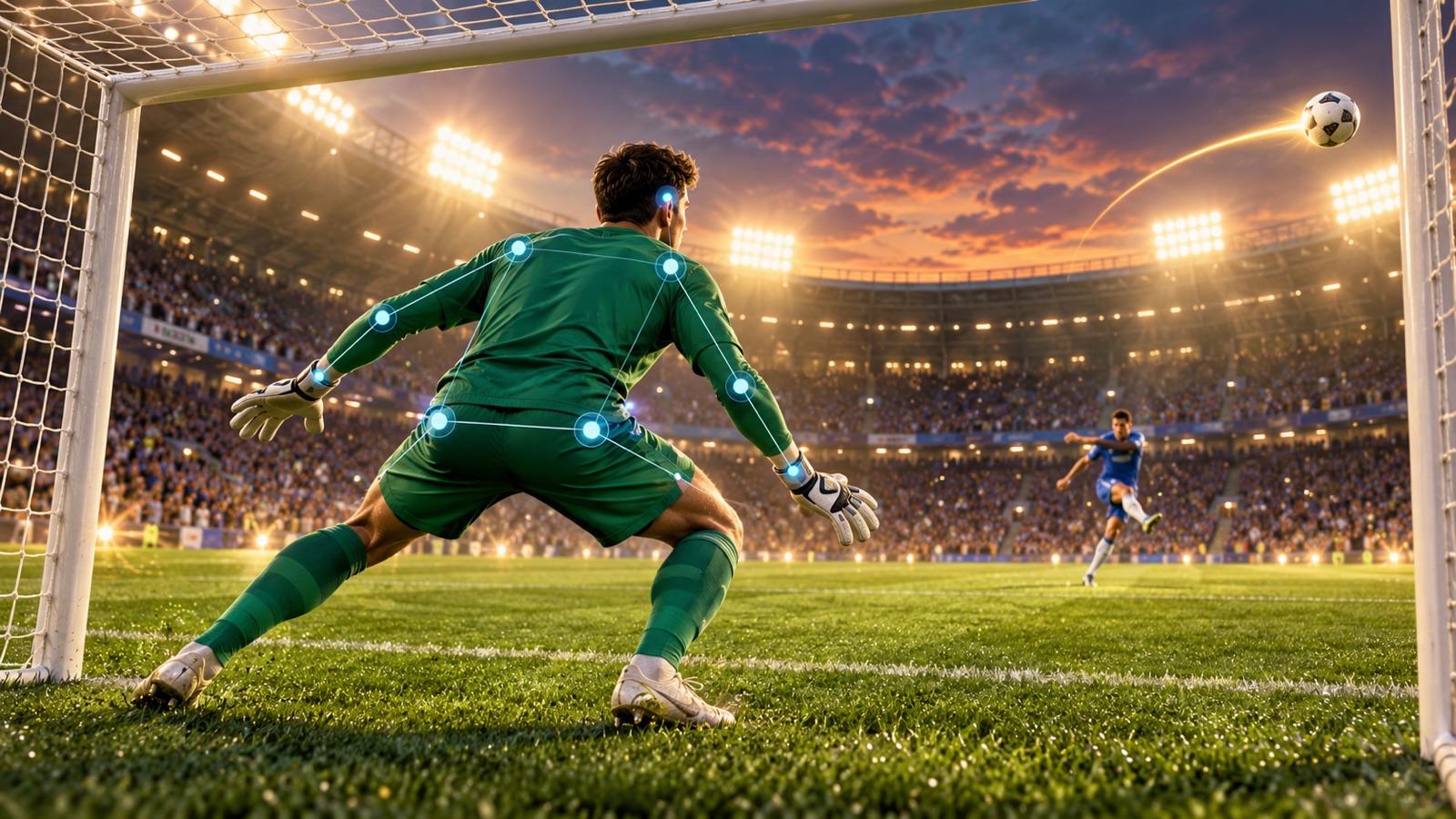
1. Fix the camera before trying to fix your reactions
Keeper needs to see your head, shoulders and arms. Put the camera roughly in front of you, step back until your upper body stays inside the frame and give both arms room to extend.
A cropped wrist cannot protect the corner reliably. A shoulder that leaves the frame makes a full reach harder to read. Good light and a background that separates you from the room also make the outline easier to follow.
Test one slow reach to each side before the first shot. If a hand disappears, move the camera or step back. This setup takes seconds and improves every save attempt that follows.
2. Start from the middle, but do not stay frozen there
The game measures your standing position and uses it as the centre of the mapped keeper. Begin square to the camera with your shoulders relaxed and your weight balanced.
That neutral position protects the softer early shots. It also leaves the same amount of movement available on both sides. Starting with one shoulder already tilted may make the next movement smaller than it looks to you.
The important distinction is between starting centrally and remaining static. Higher levels widen the goal and reduce how much of it a still keeper covers. Centre is the launch point, not the whole plan.
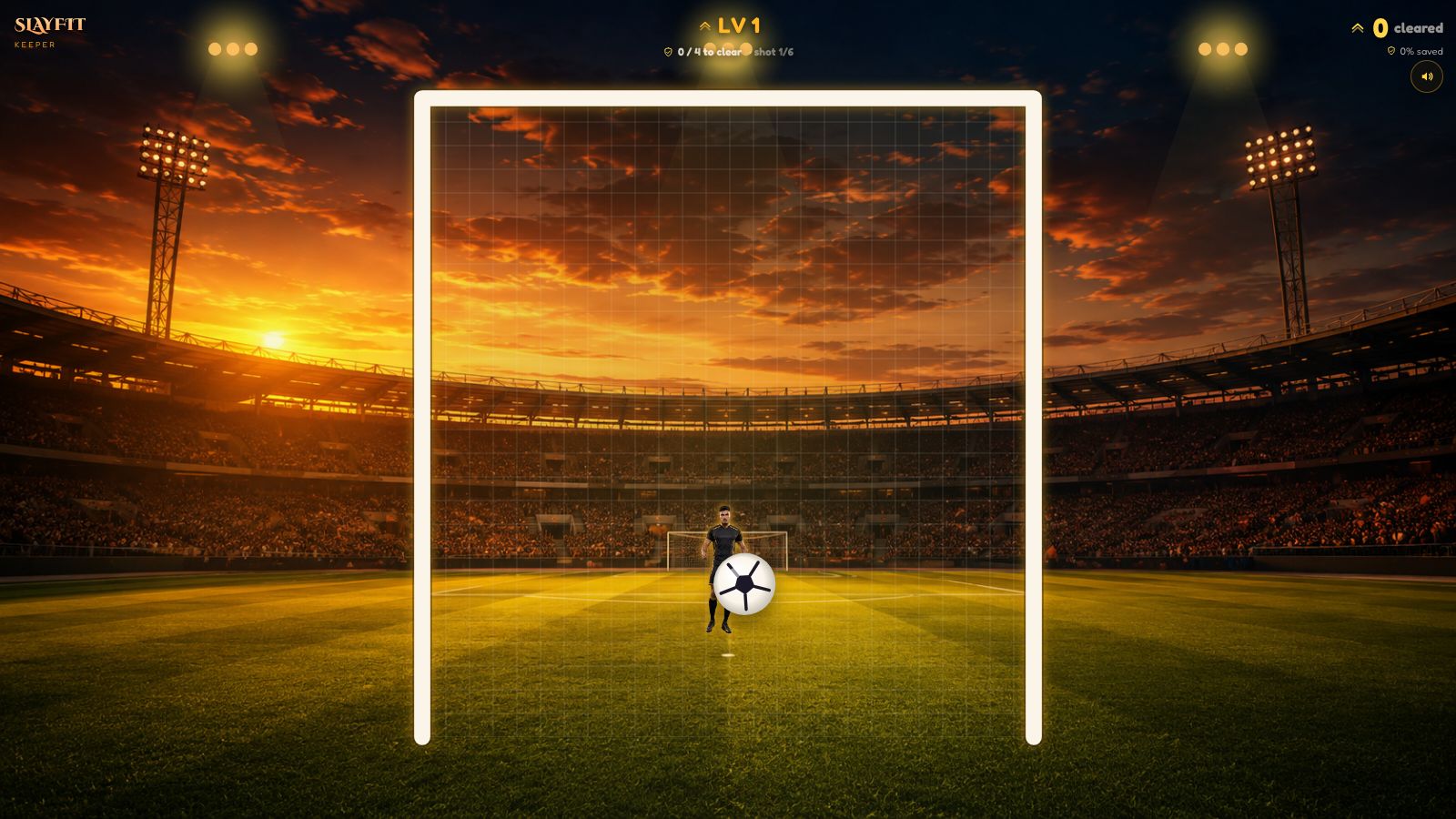
3. Read the windup before chasing the ball
Every shot has a short windup before its flight begins. Use that pause to reset your stance and bring your attention back to the shooter.
Do not throw both hands toward the first visible movement. Wait for the shot to commit, then follow the early direction. The ball accelerates toward the goal, so the beginning of the flight is the useful planning window.
This is the closest Keeper gets to a goalkeeper reaction drill. The aim is not to move randomly at maximum speed. It is to notice a cue, choose a side and produce one clear response.
4. Move your torso with your hands
The save test does not treat your hands as the only useful points. It builds a shield from the visible head, torso, arms and gloves. That means a full lean covers more useful space than a wrist flick.
For a ball outside your standing outline, shift the shoulders and hips toward it while extending the nearer arm. Keep the other arm active too. A wide two-arm shape gives the mapped keeper more continuous coverage than one reaching hand and a collapsed body.
You do not need to jump across the room. Keeper amplifies the lean into an on-screen dive. Make the direction obvious, stay inside the camera frame and let the mapping create the larger movement.
5. Commit early to corners
Corner shots become more common as the level rises. They are also where hesitation costs the most because the keeper has farther to travel.
When the initial path clearly points outside your standing coverage, begin the lean before the ball looks large. A late reach can look dramatic and still arrive after the save is judged.
Top corners need both sideways movement and height. Low corners need a lean that keeps the arm extended toward the goal line. In both cases, move toward the destination rather than swiping across the ball's current position.
6. Expect the swerve to change the middle of the path
The ball does not always travel on a straight line. Keeper adds a lateral bow during flight, and that curve grows with the level.
Watch the ball for a fraction longer before making a tiny correction. The first direction still tells you which half of the goal matters, but the middle of the flight can drift. Keep your base movement decisive and use the final arm extension for adjustment.
Overcorrecting is the common mistake. If you reverse the whole body every time the ball bends, you can lose both sides. Hold the chosen side, track the curve and change the reach rather than restarting the dive.
7. Play the four-save target, not the perfect round
Each level contains six shots. You clear it by saving at least 60 percent, which rounds up to four saves. Once four are secured, the level is safe. If four becomes mathematically impossible, the run ends early.
This makes consistency more valuable than one spectacular stop. After conceding, reset immediately. The next shot is still one of the four you need. Carrying the previous miss into the windup only spends the best reading time.
Use the counter as a simple plan: secure the central saves, commit to the readable corners and accept that a hard swerve may win sometimes. Four controlled saves beat three heroic ones.
A quick checklist before the next shot
- Are my head, shoulders and both hands inside the camera frame?
- Am I balanced around the calibrated centre?
- Did I reset during the windup?
- Am I moving my torso as well as my glove?
- Does this shot need an early corner commitment?
- Can I adjust for curve without reversing my whole movement?
- How many of the four required saves do I have?
Get in goal
The useful loop is simple: frame yourself, read the windup, choose a side and make one clear movement. The game answers with a save or a goal, then gives you another shot.
Play Keeper, the free soccer goalkeeper game in your browser. No download is required, and demo mode is available if you want to see the shot pattern before allowing camera access.
For the system behind the pressure, read how I built Keeper's shot timing, swerve and pose-based save test. For a shorter introduction, see how the AR football game works.