Isometric Exercises: How I Turned Six Holds Into Browser Challenges
I wanted to build a fitness game with almost no game rules. Pick a position. Get into it. Stay there for as long as you can.
The idea sounded simpler than a boxing game or a dinosaur chase. It was not. A timer is only useful when the browser can tell the difference between a real hold, a half-finished pose and a body that has drifted out of frame.
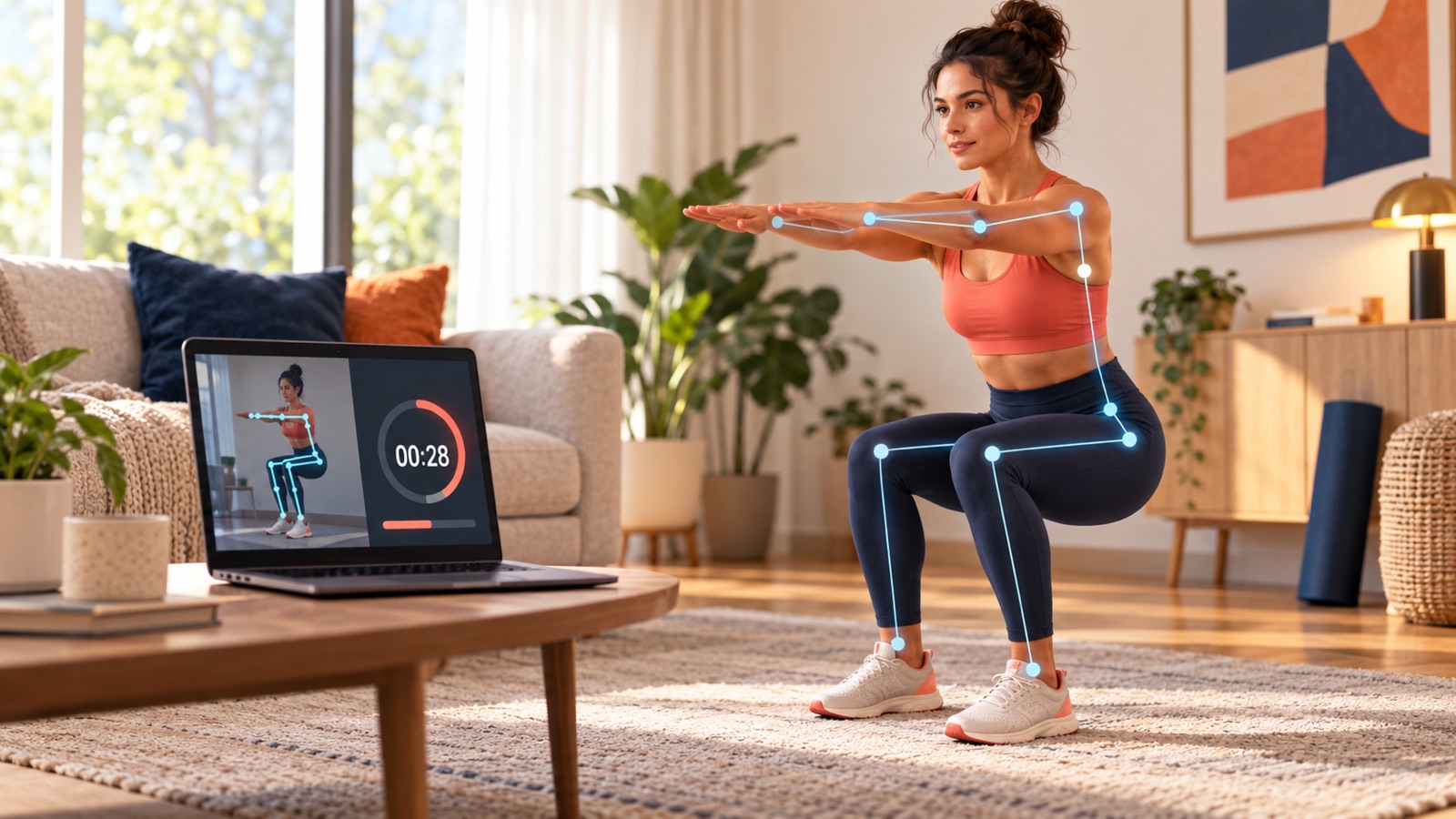
That became SlayFit Exercise Holds, a set of six isometric exercises played through a webcam. The video stays in the browser. Pose landmarks drive the checks, and the clock runs only while the selected position is valid.
Why a hold became a game
Most games ask the player to keep moving. A hold reverses that logic. The body should remain controlled, but the screen still needs to explain what is happening every second.
I treated time as the score. That creates an immediate target without adding coins, enemies or a fictional objective. A first attempt establishes a personal benchmark. The next attempt has one clear question: can I stay valid for longer?
The design is deliberately modest. SlayFit is not evaluating health, diagnosing movement or certifying a record. It is checking visible geometry well enough to run a casual browser challenge.
Six poses need six different rules
The collection includes chair pose, tree pose, a one-leg stand, a deep squat hold, Warrior II and a plank hold. They share a timer, but they do not share one universal detector.
Chair pose needs bent knees and an upright upper body. Tree pose needs one raised foot placed against the other leg. A one-leg stand looks similar, but the raised foot must stay free. Warrior II needs a wide stance, one bent knee and arms that remain near shoulder height.
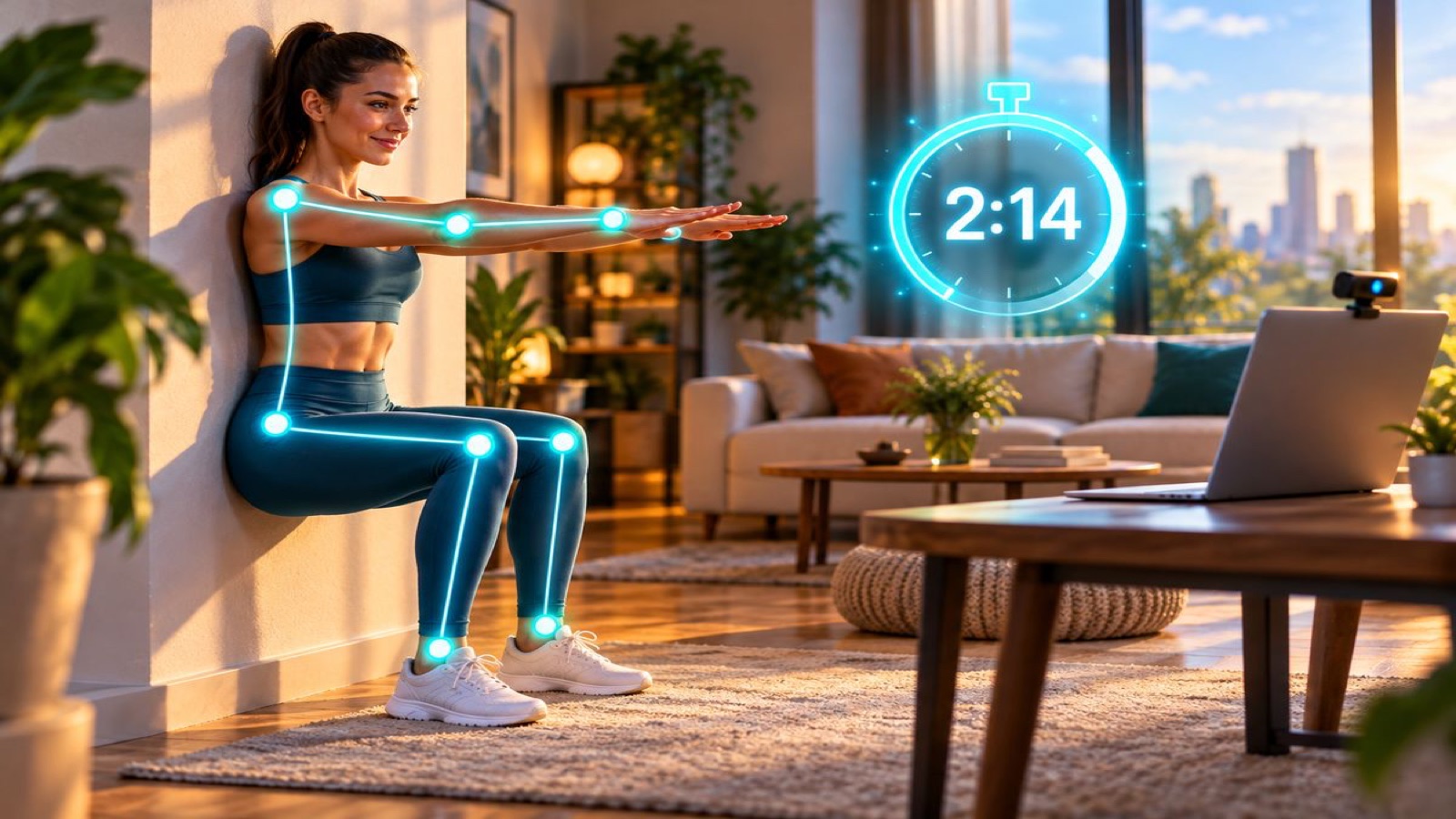
The plank is different again. It is filmed from the side so the browser can compare the shoulder, hip and ankle line. That camera choice matters as much as the angle thresholds. A front view cannot describe the same shape reliably.
The setup screen is part of the detector
The most useful fix was not another mathematical threshold. It was better framing guidance.
Before the attempt, each challenge tells the player where to face, roughly how far to stand and which joints need to remain visible. Chair pose can work with the feet outside the frame because the knees and upper body carry most of the useful information. Tree pose needs the legs. A plank asks the player to place the camera low and turn side-on.
A ghost pose and a stand-here frame make those instructions visual. This reduces the number of failed attempts caused by a perfectly good pose happening in the wrong part of the camera image.
I made the clock wait for a deliberate pose
One matching frame is not enough. A person can pass through the right geometry while getting ready, or the pose model can briefly estimate a joint in the wrong place.
The game waits for a stable valid state before the attempt begins. During the hold, it keeps checking the important joints. If the body leaves the accepted shape, the feedback identifies what changed instead of silently awarding time.
This is the central design problem in isometric hold exercises controlled by a camera. The timer has to feel strict enough to mean something and forgiving enough to survive ordinary landmark noise. I would rather explain why a clock stopped than hide that decision behind a generous score.
Feedback has to describe one fix at a time
A raw detector can produce a list of failed conditions. That is useful for debugging and terrible for playing. If the knees, hips and arms all drift at once, the player cannot repair three instructions while already under tension.
The interface prioritises the correction that is most useful now. It might ask for a deeper bend, level arms, a straighter body line or better camera visibility. The message is short because the player should be able to read it without abandoning the pose.
That feedback loop is what turns pose tracking into a game. The camera reads a shape. The screen returns one correction. The player adjusts. The clock confirms when the correction worked.
The score belongs to the player, not the webcam
All pose processing happens locally in the browser. The camera feed does not need to be uploaded for the hold detector to work. Only the resulting score can be sent when a player chooses to save a completed attempt.
I also keep the claim around each score narrow. A SlayFit time is a game result, not an official record attempt. The record references on pose pages provide context, but their rules, supervision and conditions can be very different from a browser session at home.
What I learned from building stillness
- A simple rule produces a good game only when the feedback is equally simple.
- Camera placement is part of the mechanic, not a line of technical setup text.
- Similar-looking exercises still need separate pose definitions.
- A stable start prevents accidental frames from becoming fake attempts.
- An honest paused clock is better than a generous number nobody trusts.
- Privacy is easier to explain when the video never leaves the device.
Try one hold and set a number
You do not need a long programme to understand the game. Choose one pose, make enough room for the camera and complete one controlled attempt. That first time gives the next round a purpose.
Play SlayFit Exercise Holds free in your browser. Start with chair pose if you want a front-facing challenge, tree pose if you want balance or plank if you can place the camera safely near the floor.
Free to play · No download · Private in-browser pose tracking · Six hold challenges.
For another look at body-controlled game design, read how I turned running in place into a dinosaur controller or how Keeper uses full-body pose tracking.